MARTIAL ARTS LINEAGE
The Integration is rooted in martial arts as a path of discipline, embodiment, awareness and self mastery. It draws from traditional foundations as well as modern training methods and additional systems that deepen practical skill, adaptability, and real world applications.
Rather than belonging to only one narrow expression of martial arts, The Integration honors the wisdom of lineage while recognizing that growth often requires cross-training, refinement and direct experience. The martial side of the system teaches presence under pressure, physical (Gut) level intelligence and the ability to act with clarity and purpose. Matt began martial arts as a young boy through Karate, but his serious training began in his early 20s when he entered a traditional Japanese martial arts school in Concord, California.
From approximately 2010 to 2017, Matt trained with extreme intensity, often 30 to 40 hours per week. During that time, he became a senior instructor, taught children, juniors, and adults, completed intensive instructor training, and earned advanced rank in multiple martial arts systems.
Matt has studied under Julio Toribio in Seibukan Jujutsu and Battojutsu, and under Ninjutsu grandmaster Masaaki Hatsumi through the Bujinkan tradition.
These systems shaped his understanding of structure, distance, timing, balance, leverage, pressure, weapons, discipline, awareness, and survival.
The Integration also draws from additional physical disciplines and movement studies, including:
Karate, Boxing, Brazilian Jiu-Jitsu, Wing Chun, Filipino martial arts, MMA, Weck Method, Biomechanics, Human Anatomy
The Integration is not limited to preserving one style.
It studies how the human body actually moves, adapts, protects itself, expresses power, and learns under pressure.
The goal is practical movement, embodied confidence, and real self-understanding.
His primary martial arts credentials include:
Seibukan Jujutsu: 7th degree black belt
Enshin Itto Ryu Battojutsu: 4th degree black belt
Bujinkan Budo Taijutsu: 3rd degree black belt
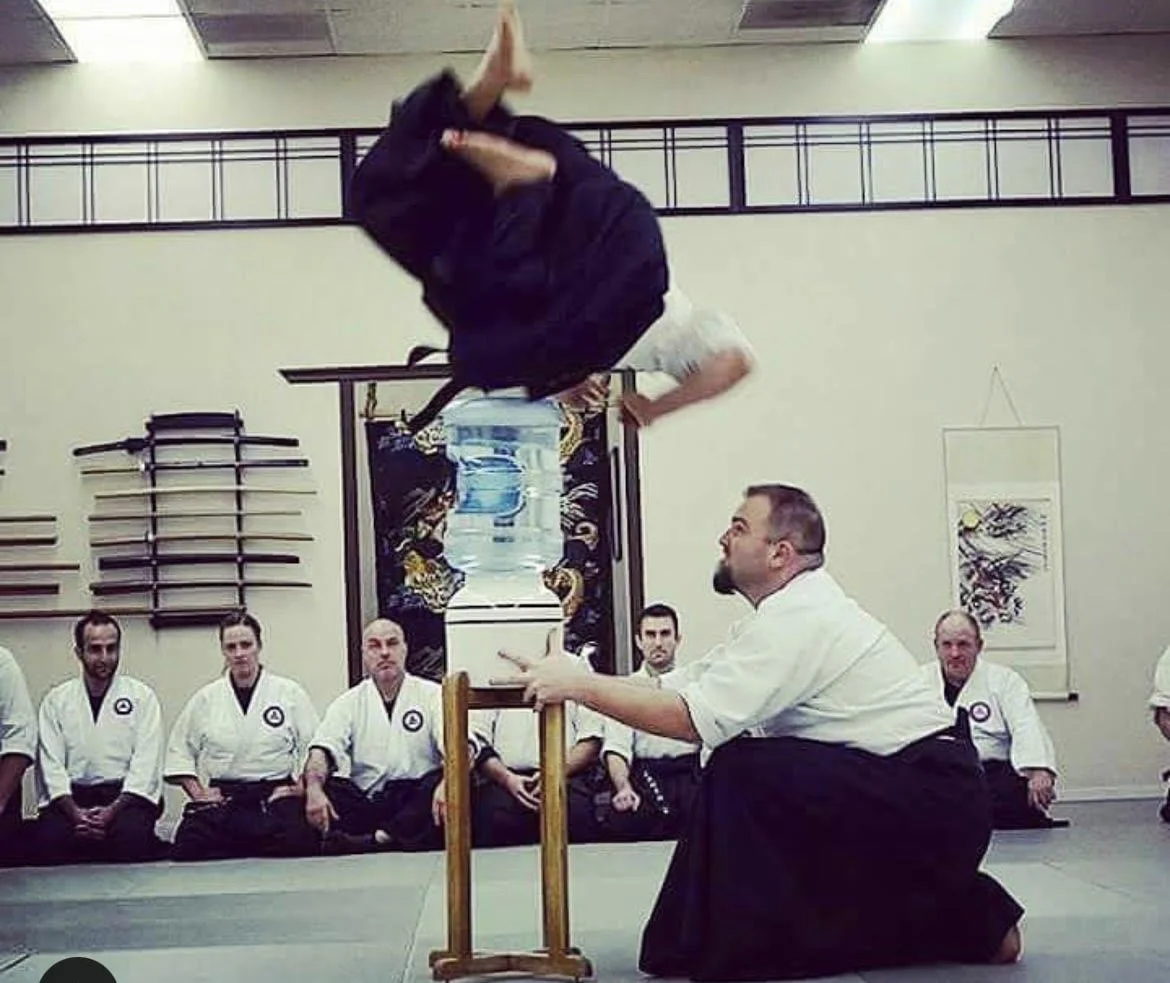
Matt demonstrating advanced Ukemi during his 5th degree black belt test
In Honor of Soke Masaaki Hatsumi
34th Grandmaster of Togakure-Ryū Ninjutsu
Born December 2, 1931 in Noda, Chiba, Japan, Dr. Masaaki Hatsumi is the founder of the Bujinkan organization and the 34th generation grandmaster (Sōke) of Togakure-Ryū Ninjutsu — one of nine ancient martial lineages he was entrusted to carry.
His path began at age 26 when he became a student of Toshitsugu Takamatsu — known as “the Tiger of Mongolia.” For fifteen years Hatsumi trained under Takamatsu, absorbing three ninja schools and six samurai jujutsu traditions. When Takamatsu passed in 1972, he transferred everything to Hatsumi — the scrolls, the titles, and the full art of all nine schools.
Hatsumi founded the Bujinkan Dojo to preserve these traditions and share them with the world. He authored over a dozen books, served as martial arts consultant on the James Bond film You Only Live Twice, and received the International Culture Award from the Japanese Imperial Family in 2000. He has taught tens of thousands of students across more than 50 countries. His philosophy centers on natural movement, adaptability, and the spiritual dimension of martial practice — principles that speak to how a person lives, not just how they fight.
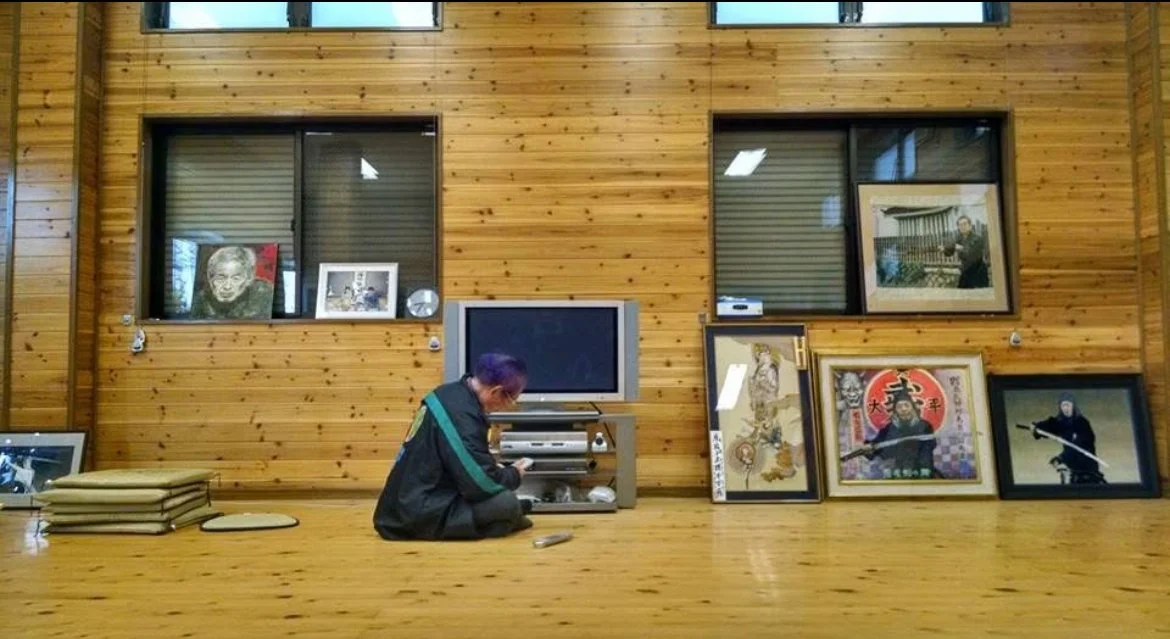
Soke Hatsumi in his personal home, Noda, Chiba, Japan. Photographed by Matthew Husino
How He Came Into My Life
I first encountered Soke Hatsumi at one of the lowest points of my life. I was 20 years old, living on the streets near a railroad track in Northern California. Someone gave me a copy of Ninjutsu: History and Tradition by Dr. Masaaki Hatsumi.
I had nothing. No home. No direction. But I had that book.
I read it on the ground. Something in those pages spoke to something in me that I didn’t have words for yet — a code, a discipline, a way of moving through the world with precision and purpose when everything around you is chaos. It wasn’t just martial arts. It was a map for becoming someone.
Years later, that spark became obsession. Obsession became training. Training became over seven years of dedicated study and thousands of hours on the mat — and eventually a journey to Japan. I traveled to Noda, Chiba, and was welcomed into Soke Hatsumi’s personal home. Not his dojo. His home. I sat in his living room while he put on a video for us on his television, surrounded by his own paintings and personal artwork — the private world of a man who carries 34 generations of living martial tradition. Very few people in the world have been in that room.
The photograph above was taken there. I took it.
From a railroad track to the living room of a 34th generation grandmaster. That is the power of this path. That is why I teach it.